![]() |
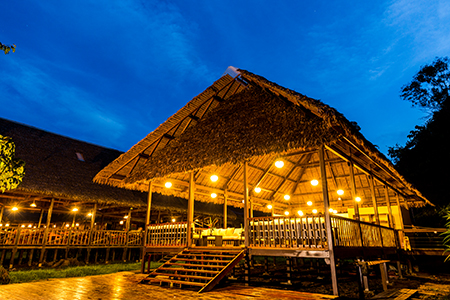
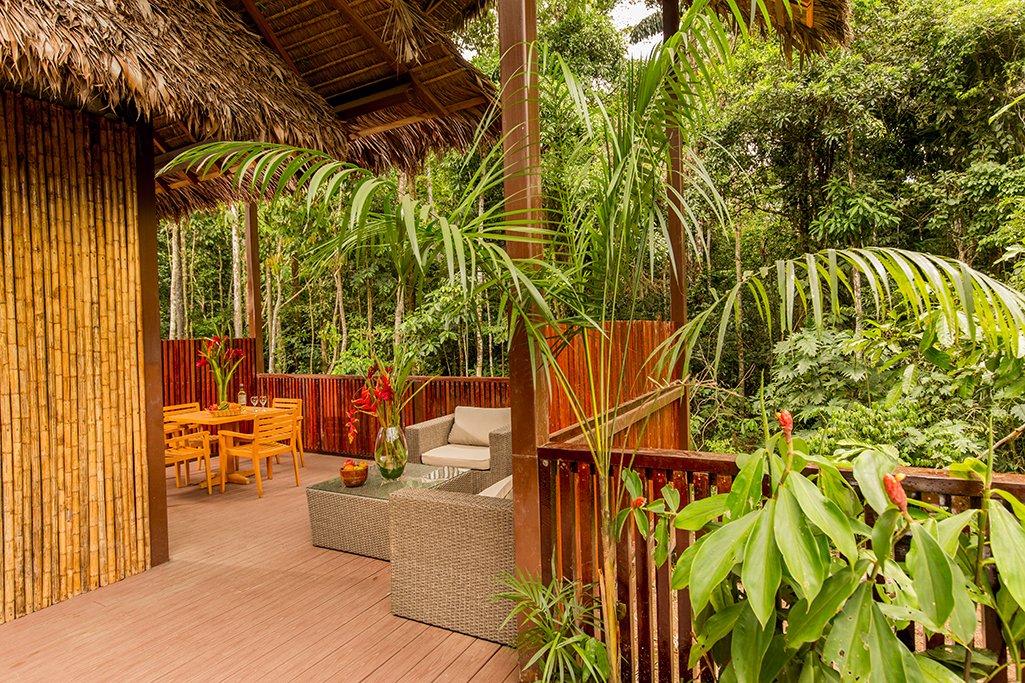
BelizeTrans-Habitat ExperienceA remarkable summer special - a combination of 3 very special luxury eco-lodges in southern Belize - 2 Nights Ballum Na - 2 Nights Jungle Camp - 3 Nights Moho Cay Lodge in a 7 night package with the last two nights at Moho Cay for free, at US$3100 per person. The offer is good through the end of July.
Chile![]() Awasi Inn - AtacamaAwasi Inn, located in the small desert oasis town of San Pedro de Atacama in northern Chile is one of the best boutique luxury hotels in Chile. Their concept from the start has been to provide first rate exclusive services, with nothing wanting, making use as much as possible of local produce and services. Last year they became Chile's first carbon neutral hotel. I San Pedro de Atacama, which has a number of exquisite 5 star hotels, Awasi still remains in a class of its own.
From May 1 - July 31 they are offering a great special - book a package of 3, 4 or 5 nights at Awasi and get 1 night complementary stay at the prestigious W hotel in Santiago immediatley prior or after staying at Awasi. ChilePuyuhuapi - Early Bird Special
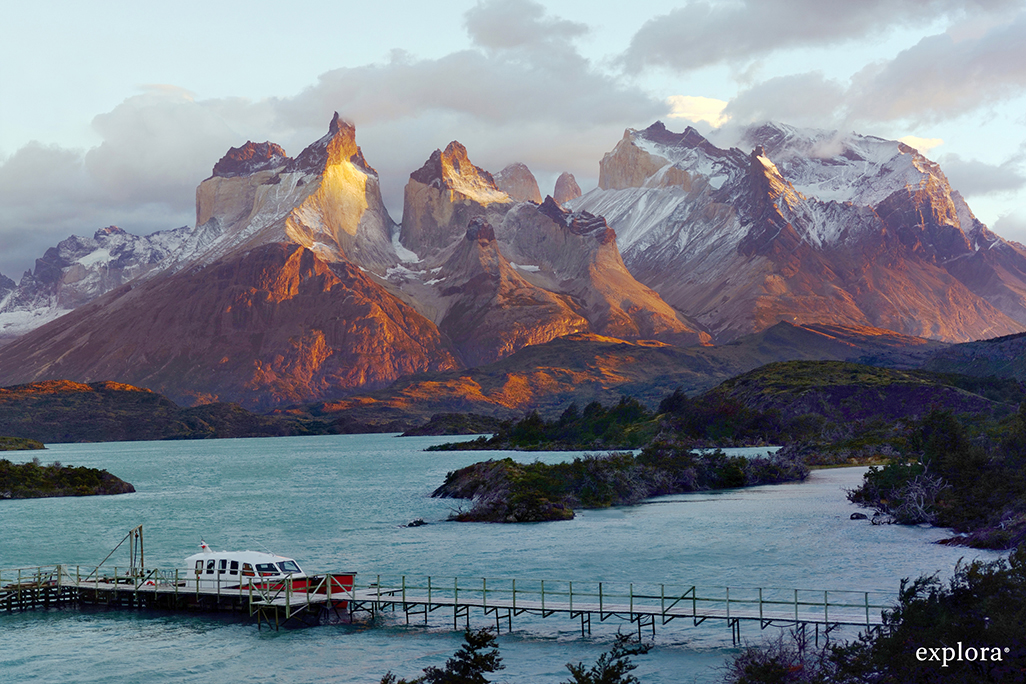
We now also offers an interesting combination program with Mallin Colorado Lodge, with its stunning location on the shore of Lake General Carrera. | ||||||||||||
Are Summer Bargains a Myth of the Past?Summer is just around the corner, which means - if you haven't booked your family vacation already, it is high time to do so before spaces will fill up. Although the economy is still a little draging, there has been a marked increase in international travel and it looks as though this trend is continuing. The good thing is, in the hope of attracting more business, and with the dollar getting slightly stronger, many places have not increased their rates this year - nor did they raise them last year, so effectively rates are still at the 2008 level, and in some cases, they have even gone down. Also, the trend of offering free nights after spending a certain number of nights at the full rate is also continuing, especially among the high-end hotels and lodges, so this is where the best bargains can be had. Cheaper hotels have not been affected as badly by the economy and in some cases picked up some of the business of the higher end hotels as people are looking for cheaper options, so this is the section where you will find the fewest bargains. I am highlighting some of the best bargains in the newsletter. Happy Trails If you have comments or suggestions, please send me an e-mail - I always enjoy hearing from my readers!
![]() | |||||||||||||
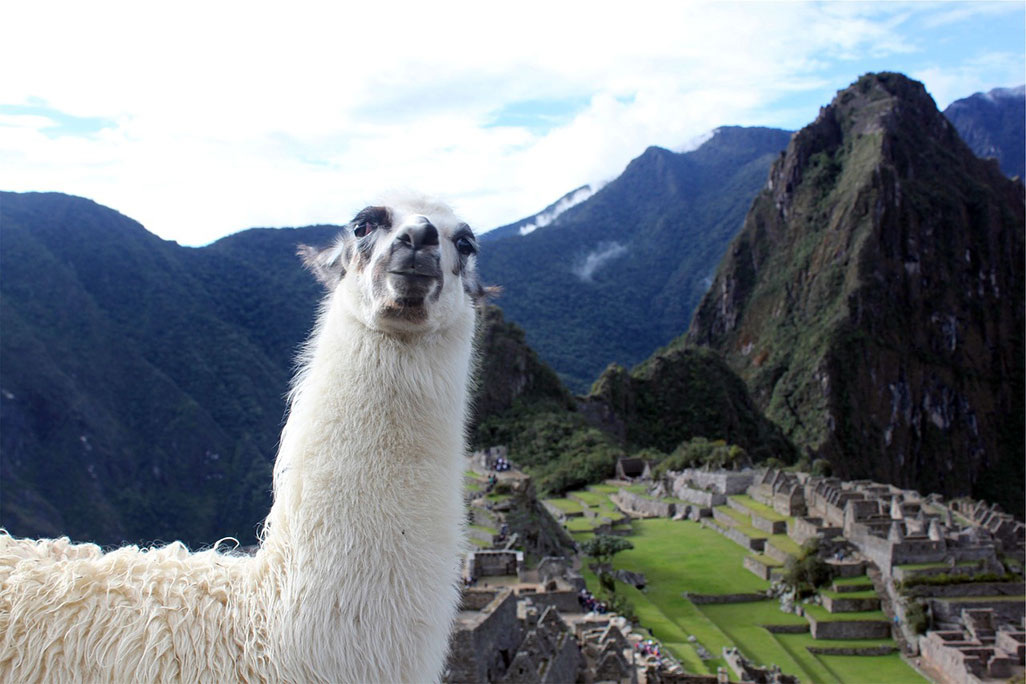
Earlier this year Peru has seen some terrible flooding in the Andes and Cloud Forest. The flooding in the Andes has lead to mudslides in the Machu Picchu area and many people were temporarily stranded. However, the Peruvian government launched an excellent rescue effort and got everybody out safely.
Luckily Machu Picchu ruins sustained no damage from the deluge, but the Inca trail as well as the railway line were closed until the beginning of April. Both have now re-opened and Machu Picchu is receiving a flood of visitors. Unfortunately the rail line has only been partially reopened and is operating a reduced service, because only the new, light-weight trains are allowed to run. Also, the trains now run from Pisacucho instead of Ollontaytambo.
The Inca Trail is also back in operation, but at this point in time I would not yet recommend it. Although the weather has improved and conditions are getting better, it is a bit of a bottleneck situation with too many people all clambering for the same services. Plus, there are still damaged areas and the more people trek, the worse erosion will become. The Salcantay Trail is even worse as it was more badly affected and the last section, from Hidroelectrica to Aguas Calientes, which normally is by train, now has to be walked because of landslides. So, in my humble opinion, this is not the best time to plan an Inca Trail hike.
However, there are some excellent trekking alternatives for those who enjoy venturing off the beaten track should consider other hiking options, such as Choquequirao - the Cradle of God, a little visited site that is similarly impressive as Machu Picchu, but without the crowds. This site is located on the slopes of the glaciated peak of Yanacocha, 1750m above the Apurimac river. Archeologists believe that Choquequirao was once used as a ceremonial center and retreat for the Inca emperor. This site is only partially excavated. Coming upon such a site conveys the sense of discovery that an archeologist might feel when first happening on such ancient remains. The Choquequirao Trek is a fixed departure tour that takes 5 days/4 nights.
For a pure nature experience, why not explore Huascaran National Park. There are some absolutely fabulous hikes in this region which do not require mountaineering skills. Take a look at this 5 day fixed departure trek through the Cordillera Blanca, Peru's most stunningly beautiful mountain range.
Another hot destination for those who like to explore beyond the Gringo Trail, is northern Peru with its wealth of archeological sites from different eras and cultures. If you are looking for authentic cultural experiences, it is here that you are most likely to find them. From the 2nd to the 6th centuries AD the lands along the north coast of Peru, between the cities of Trujillo and Chiclayo, were once dominated by the empire of the Moche. They were powerful and warlike, eventually dominating nearly the entire northern coast. But posterity remembers them best for their artistic skill and technological advancement, including metalwork for the production of extraordinarily beautiful jewelry, and production of both ceremonial and decorative pottery. Although the Moche were the best known and most powerful pre-Incan culture of this region, they were not the only one. Other cultures who inhabited the area at different times include the Chimu and the Lambayeque, who took over the southern and northern margins of the Moche areas respectively, after the Moche disappeared during the 6th century A.D. All of these cultures have left a host of fascinating archeological remnants which provide glimpses into their lost worlds.
The Moche Route - fixed departure
The Earthquake that struck central Chile has been handled quite amazingly well by the people and by the government. Of course there is still a lot of work to be done and close to the epicenter the true impact of this megaquake becomes more apparent and there are still plenty of people who are were made homeless, jobless or both. It will take time to get the whole country back on its feet again, but as far as infrastructure is concerned, in Santiago life returned to something approaching normalcy with remarkable speed.
Santiago airport as well as some hotels near the airport were worst hit. Nevertheless, within a couple of weeks flight schedules were returning to normal and now once again operate as scheduled, although one of the terminals has temporarily been moved into a tent while the main building is getting fixed.
Within the city there are areas that have been damaged, but on the whole life goes on amidst the patches of rubble that serve as an eery reminder of that megaquake. Areas along the coast and in the Central Wine Valley have also been affected. A number of coastal villages were virtually wiped out by the tsunami that followed in the wake of the earthquake. But, there too, some areas coped better than others. One of the worst affected places was Juan Fernandez Island, which was cut off for days following the tsunami. Tourism here is still interrupted, but is expected to resume in the fall.
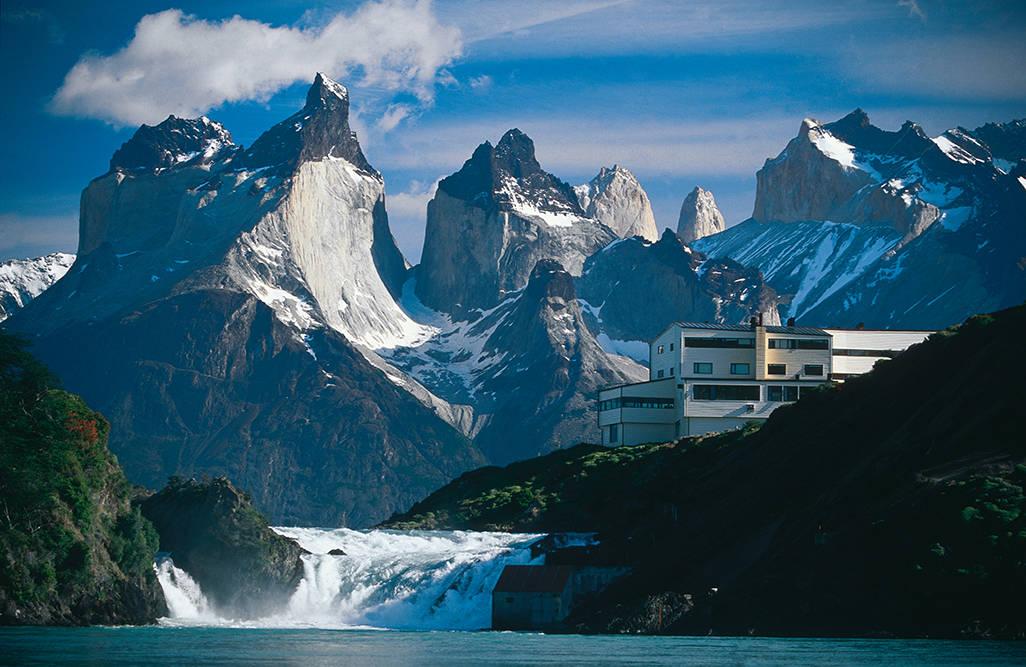
As devastating as the earthquake was in the central parts of the country - most areas were in fact completely unaffected. Patagonia, as well as northern parts and the Atacama only felt a faint rumble which did not cause any damage what so ever. Thus, these areas are as ready to receive visitors as they have ever been.


Experience in one package two of the most incredible locations in Chile - Patagonia and Atacama, at the extreme opposite ends of the country . Tierra Atacama and Remota Inn have teamed up to present you with an irresistable offer:
Starting every Wednesday between May 5th - June 23rd, 2010 you can combine a 9 day package, staying 4 days/3 nights at Remota, Patagonia, overnight in Santiago at the Ritz Carlton and then spend another 4 days/ 3 nights at Tierra Atacama for only US$2195 per person, based on dual occupancy.
This is a great deal at these exclusive hotels - spaces, no doubt, will go quickly. So, hurry if you don't want to miss the opportunity.
* Does not include domestic airfares


On July 11, 2010 a total solar eclipse will occur practically right above mysterious Easter Island. Eclipses have always intrigued wo/mankind. What great magical being could swallow up the sun? Even now, millions watch the spectacle each year in awe. An eerie ambience descends as day turns to night in minutes, leaving nothing but a fiery ring, visible behind the shadow that obscures the earth. Even the birds fall silent and it is as if the whole world holds its breath, anxiously awaiting the rebirth of the sun. Easter Island, famous for its mysterious giant stone sculptures known as 'Moais' certainly provides one of the most spectacular backdrops imaginable for such a dramatic and mysterious cosmic event.
If you plan to witness this forthcoming eclipse in Easter Island don't wait, RUSH to secure your hotel room and flights! Eclipse watchers from all over the world are already preparing right now to congregate on this small island in July.
Peru is an exotic and exciting destination, full of mystery and awe-inspiring sights and adventures. It is so otherworldly compared to our everyday realities that it is easy to become overwhelmed, especially when one first arrives. This article provides some basic (and hopefully useful) information for first time visitors to Peru.

Lima, the capital of Peru, is the main hub for international arrivals. Located roughly in the central coastal area of the country almost all domestic flights also connect via this hub. Thus, whether you like it or not, chances are that you will be spending at least a little time in this city. Some other airports now have also been developed to receive international flights, but most are still routed through Lima, even if the final destination is Cusco or Iquitos.
Flights to/from North America are often scheduled at ungodly hours. If your flight arrives very early in the morning you either have to hang around at the airport for your connection or get a day room at a nearby hotel. If you are spending a day or two in Lima itself, the only advantage of very early flight arrivals is that the journey into the city center is relatively swift and unobstructed by other traffic - something that changes drastically once the city wakes up.
There are several ways to get into town from the airport. Some hotels offer a free shuttle service. If yours' does -great! Use it. If it doesn't, your travel agent can arrange a pick-up service for you. In that case, there will be someone waiting for you with a sign that has your name on it. This is the most comfortable and safest option, though a little more expensive than takine regular types of transport. It takes all the worry out of figuring out how to get yourself to your hotel.
The next best option is to get an 'official cab' - there is a booth inside the airport where you can ask for one. But be prepared that before you get there you will be beleagured by droves of taxi dirvers official and unoffical who are all clambering for your business. Compared to unofficial taxis, the offical, licensed ones are quite expensive, due to the fact that cab drivers have to pay an extra fee for being able to get into the airport compound.
Some people advise to go outside the airport and flag a cab down - but this is not safe, especially late at night or early in the morning. Not only do you risk getting robbed by opportunistic thieves who hang around the airport, but also there is an inherent risk involved with using unofficial cabs. While some drivers may be perfectly honest - they are in the minority. Many more will try to divert you, given half a chance. Favorite scams are 'oh, I know that hotel - it burnt down the other day. But I know another one, very nice!'…or, 'that hotel is full, I went there earlier…but I know another one, very nice…' Taxi drivers often have deals with hotels to bring in business for a small commission. Unfortunately, plain robberies by unofficial taxi drivers are also not unheard of.
And finally, yes, there is also a regular bus, which is very cheap. But this option is only recommended for independent travelers with a good working knowledge of Spanish who arrive during the day and know exactly where they are going. There are many bus stations down town - every bus company seems to have their own terminal, so it is very confusing to figure out where you need to go unless you already know Lima pretty well. At night this option is a total no-no - you are just asking for trouble, especially if you are laden with a big suitcase or backpack. Don't even think about it.

Most nationalities do not require a visitor's visa to enter Peru. The passport must be valid for at least 6 months after the date of entry. Visas are issued for 30 - 90 days, at the discretion of the immigration officer who puts the stamp in your passport. You'll be given a tourist card, which you should keep safe, along with your passport. This card must be returned when you leave the country. If you lose it you must apply for a replacement at the immigration office.
Who needs a visa:
All African countries (except South Africa), Afghanistan, Saudi Arabia, Bangladesh, Bahrain, Bhutan, Cambodia, United Arab Emirates, India, Iran, Iraq, Jordan, Kazakhstan, Kyrgyzstan, Kuwait, Lebanon, Maldives, Mongolia, Nepal, Oman, Qatar, Laos, North Korea, Pakistan, Syria, Sri Lanka, People's Republic of China, Turkmenistan, Uzbekistan, Vietnam, Yemen, Cuba, Albania, Armenia, Azerbaijan, Belarus, Bosnia, Bulgaria, Cyprus, Croatia, Slovenia, Estonia, Georgia, Hungary, Lithuania, Latvia, Macedonia, Moldova, Poland, Czech Republic, Slovak Republic, Romania, Russia, Turkey, Ukraine
A note on passports: it is a very good idea to make a photocopy of both, your passport and the tourist card and keep it somewhere safe. Passport theft has become a real problem in Peru.
For international departures it is a good idea to be at the airport 3 hours prior to your scheduled departure time. There is a departure tax to be paid, which is currently US$31. It is a good idea to have this handy in cash and in the exact amount as change seems to be in perpetual short supply. For domestic flights 2 hours check in time is sufficient. There are also domestic airport taxes to be paid, currently in the range of US$6-US$10.

It is no longer news - the 7.0 earthquake that has devastated Puerto Prince on January 12th, and flattened the capital has thrown the nation into a desperate nightmare. Haiti has long been the poorest country of the western hemisphere - it is now virtually annihilated. Perhaps as many as 200 000 people or even more have died, and many more are left injured and homeless, while basic services are destroyed. A faint glimmer of hope is dangling from an incredibly thin thread - the lifeline of international aid. While aid organizations have been struggling to get to the scene the people of Haiti were largely left to help themselves, digging out the dead with their bare hands, hoping that aftershocks will not create more havoc and conditions worse than they are already, hoping that aid will arrive soon, food, water, medicine…the most basic supplies that will offer a chance of survival to those who did not die from the immediate impact.
For the rest of us this terrible catastrophe is a chance to pull together as a human family and just help out in whichever small way we can. This crisis is one of epic proportions. It will not be over in a couple of weeks or so, though other news will take front page. Haiti will need more than just a few hand outs to fill hungry mouths. It will take a sustained effort to help this nation to recover and to rebuild its life.
Here are some aid organizations and networks that are collecting funds and support for the short, medium and long term:

Iceland, an relatively small island somewhere just south of the Arctic Circle has long been a completely obscure destination - until just recently, when the volcano Eyjafjallajokull's powerful volcanic eruption demanded everybody's attention. Air traffic came to a halt and thousands of travelers found themselves stranded, stopped in their tracks by a cloud of ash that obscured European skies for over a week.
The capital of Iceland is Reykjavik, which despite its 'outpost of civilization' location, is a vibrant city full of surprisingly fresh and innovative cultural vigor - stylish, artistically inspired, and classy. Yet, like few other places in Europe, Iceland is also keenly aware of its natural treasures, both powerful and precious. The city derives its energy from geothermal sources, making it the cleanest city in all of Europe.
The greatest environmental threat the country is facing is erosion and loss of soil, but the department of environmental affairs is devoting a great deal of its energies and resources to combatting this trend.

Iceland exists almost in a realm unto itself. It is in every way a place of contrasts and extremes, a place that is very much still 'in the making', where the drama of geological creation can be witnessed and experienced. Nothing is more awe-inspiring and humbling than to watch the forces of nature express their unbridled power.
Iceland should in fact have been called more appropriately 'Fire and Iceland' - for its volcanoes are still shaping this otherworldly landscape - a landscape of fire and ice. Iceland is Europe's last piece of real wilderness. In an area roughly the size of Ireland nature dominates. Just 313 000 people, less than the population of Cardiff, inhabit this little big country and almost 200 000 of them live in the capital, Reykjavik.
Majestic waterfalls, seething volcanoes, bubbling hot springs and geysers, bizarre geological formations, lavafields, mountains and glaciers - a landscape that appears like the playground of trolls, who toss big boulders around like balls. Nature here is primeval, an active force that has to be reckoned with. It often seems hostile and harsh, but this is earth-in-the-making. It is a unique opportunity to watch an active geological process taking place, constantly transforming and reshaping the landscape. Thanks to the nearby gulfstream the climate here is warmer than expected. Also, the earth crust is thinner than on the European or American continent and thus magma that boils beneath the surface helps to warm the ground which provides tolerable growing conditions to unlikely plants such as orchids and gentians normally found in much more southerly regions. This is also what gives rise to the innumerable hot springs that are found everywhere.
Traveling to an exotic destination is always exciting. Fun and adventure are calling. But to make your travels as happy and enjoyable as they can be, don't forget to check the basics - this will minimize the chances of running into unexpected or unfortunate surprises.

Costa Rica comes out tops on Environmental IndexYales annual Environmental Index survey has established Costa Rica again among the top 4 countries when it comes to a green, clean environmental sustainability and well being. Top of the list is iceland, followed by Switzerland, Costa Rica and Sweden. Goes to show that a commitment to environmentally sensitive development truly does pay off. Fly Direct From Europe to Central AmericaKLM offers new direct flights from Europe to San Jose without having to go through the USA. Stop-overs in Panama City and Amsterdam. Costa Rica's Manuel Antonio National Park Cleans Up Its ActManuel Antonio, one of the most beautiful and oldest established parks in Costa Rica is very popular - and as a result its capabilities to keep things clean and green are sometimes overtaxed. Now a grant has been provided to help the park take measures to clean up its act with regards to its waste management. |
| Nicaragua |
|---|
NICARAGUA: Can Army Protect Plundered Forest Reserves?
By José Adán Silva |
| Chile |
Aymara Indians fear damage to El Tatio Geysir Field |
Northern Chile boasts some amazing geothermal fields, of geysirs and bubbling mudd puddles, which serve as an important tourist destination. The Italian-Chilean consortium Geotérmica del Norte is currently drilling in the area in order to research its potential for energy production. However, the native population, which also manages El Tatio Geysir Fields, is deeply concerned about the drilling, which they say will upset the fragile balance of the desert ecosystem. |
| Galapagos |
Swine Flu precautionsEcuador has taken steps to combat the spread of swine flu. Passengers will have to fill in forms upon arrival and those traveling to the Galapagos will be handed masks for protection on the flight. Suspected cases will be isolated in their hotel rooms or cabins and doctors will be called to examine the patients. They will then determine whether the patient is fit to travel on or not. Galapagos Fossil Fuel Free by 2015On a recent trip to the Galapagos Islands Ecuador's President Rafael Correa has announced that he wants to make the Galapagos Islands Fossil Fuel Free by 2015. Already the islands derive 50% of their energy from wind turbines, which were set up after a tanker lost a major amount of fuel in the vicinity of the islands in 2001. Luckily the sea currents took the oil away from the islands and major damage could be averted, but it was a close wake-up call. Since then tourism has increased and with it the demand for fuel, so more needs to be done. It is an ambitious undertaking as the wind turbines must also be placed in such a way as not to endanger wildlife. But it is a step in the right direction... |
| Ecuador |
Crude |
Crude, the movie about Chevron's messy legacy in the Ecuadorian Amazon has been released. This Film is brutally real and focuses on many inconvenient truth, which it shows without disguise. Oil exploration in the Amazon is not sustainable. It creates a toxic wasteland, which destroys the habitat of numerous species of plants, animals and people who live there. It is about time that the world must open its eyes to the scandalous behaviour of oil corporates and stands up for the protection of these remote and fragile places. Crude - the official website |
| Peru |
Lima - Counterfeit Dollar Capital of the WorldPeru has taken over from Columbia as the no. 1 place for counterfeit dollars. When in Peru use local currency, or bring small enough bills to pay your way if you do pay tips, etc in dollars, so you don't have to worry whether your change is real or fake. |
|
|